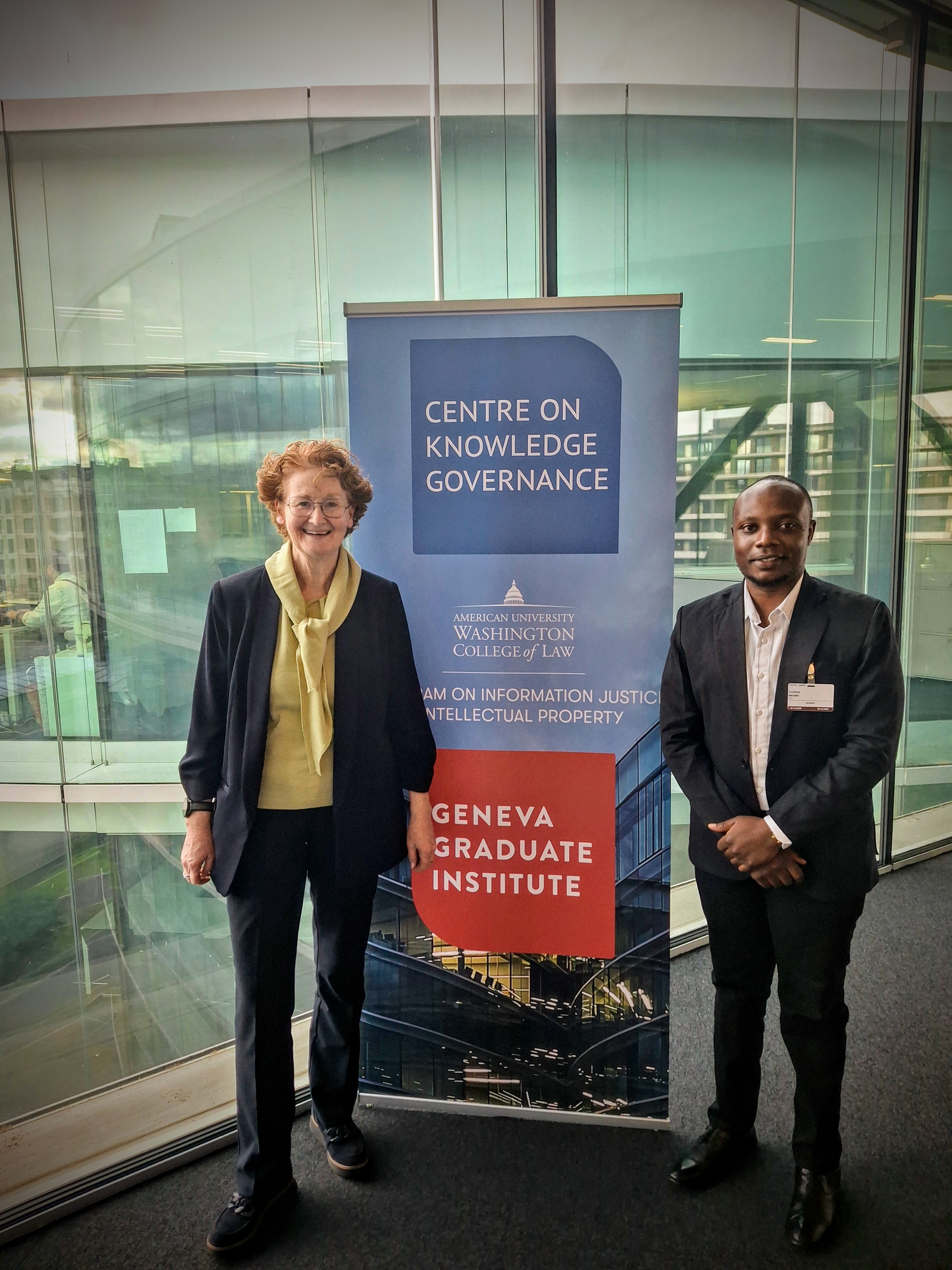
Teresa Hackett, Manager of the EIFL Copyright and Libraries Programme, reports from Geneva where she joined advocates for copyright law reform promoting the adoption of modern copyright laws that maximize access to knowledge. She attended two events: the launch of the new Centre on Knowledge Governance and the 47th session of the World Intellectual Property Organization (WIPO) Standing Committee on Copyright and Related Rights.
A new player in Geneva - Centre on Knowledge Governance
Knowledge governance refers to the policies, institutions and processes that regulate how knowledge and information is created, shared and used. The mission of the new Geneva-based Centre on Knowledge Governance is to promote justice and sustainable development within international policy-making institutions that govern access to and use of information (such as WIPO, the World Health Organization - WHO, and the World Trade Organization - WTO). The Centre will conduct research and offer educational programmes and technical assistance to support Geneva-based diplomats, government policy makers and stakeholders advocating for the public interest in international instruments (such as treaties and recommendations) on intellectual property (IP) rights, including copyright.
The launch event on 3 December 2025 at the Centre’s new home at the Geneva Graduate Institute featured a book launch and a high-level panel discussion. Wend Wendland, Former Director of the Traditional Knowledge Division at WIPO, introduced his new book, ‘The Journey to the WIPO Treaty on Genetic Resources and Associated Traditional Knowledge (Policy, Process and People)’, while H.E. Guilherme de Aguiar Patriota, Ambassador of Brazil to the WTO and President of the Diplomatic Conference that adopted the ground-breaking treaty in 2024, shared his memories of the historic occasion.
Eminent experts Prof Ruth L. Okediji, Harvard Law School and Faculty Director, Center for the Study of African Societies and Economies (CSASE), and Ellen ‘t Hoen, Director, Medicines Law & Policy, gave their perspectives on how IP can, and should, respond to people’s needs in the 21st century. Examples included the COVID-19 pandemic that highlighted shortfalls in the copyright and patent systems as access to learning resources during lockdowns became scarce, and global inequities in access to vaccines became a scandal.
EIFL congratulates Sean Flynn, Director of the Geneva Centre on Knowledge Governance on the launch of the new Centre, and the excellent team who will lead its activities providing targeted and timely assistance to policy-makers and diplomats delivering on policies and priorities in support of access to knowledge and development.
New proposals at WIPO’s copyright committee bolster the L&E agenda
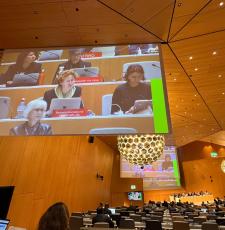
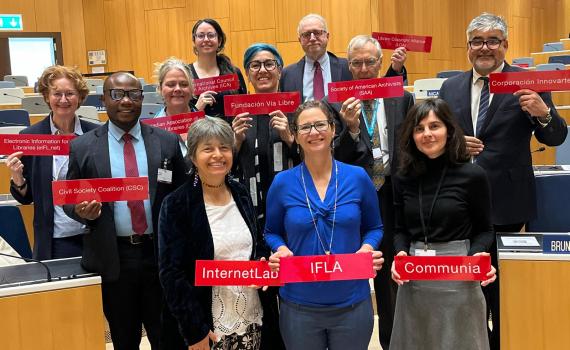
 At WIPO, the Standing Committee on Copyright and Related Rights (SCCR) is the main body that sets global rules and international standards on copyright. EIFL, which has observer status at WIPO, joined members of the Access to Knowledge (A2K) Coalition at SCCR/47 during its meeting on 1 - 5 December 2025 to advocate for fair and balanced copyright laws for libraries, education and research, and people with disabilities. Of particular interest were four new proposals on limitations and exceptions (L&Es), also known as user rights, that were introduced during the session.
A promising new proposal prepared by the African Group (SCCR/47/5) is detailed, substantive and comprehensive, adding significantly to the body of work on L&Es in the committee. A proposal “in the Framework of Work Towards an Appropriate International Legal Instrument or Instruments on Limitations and Exceptions” by the SCCR Chair and Vice-Chair (SCCR/47/8) while more general, is wide-ranging and it clearly helps to implement the workplan on L&Es adopted at SCCR/43. Two new proposals by the United States that were published during SCCR are updated versions of Objectives and Principles for L&Es for education, teaching and research institutions (SCCR/47/9), and libraries and archives (SCCR/47/10).
With all this new material, the Committee agreed to use the documents as the basis for future discussion, and to work towards finding convergences and commonalities in line with the 2012 General Assembly mandate (to work towards an international instrument, of whatever kind), and the Work Program adopted by the Committee in 2023. The four documents contain many common elements including national exceptions, research and education, preservation, access to copyright-protected works, people with other disabilities, cross-border uses, technological protection measures, and limitations on liability.
The new proposals illustrate continued engagement by WIPO member states towards progress on L&Es, despite major sticking points over where the discussion on L&Es is heading (the form of any new instrument), and geopolitical tensions that currently challenge progress in the multilateral arena. EIFL encourages delegates to focus on the substance (text-based work) and on the areas of convergence. Only WIPO can provide an international solution that guarantees libraries everywhere the rights they need to preserve our cultural heritage, support education, and enable research across borders, a key building block in achieving EIFL’s vision of a world in which all people have the knowledge they need to achieve their full potential.
SHARE / PRINT


RECENT BLOGS