
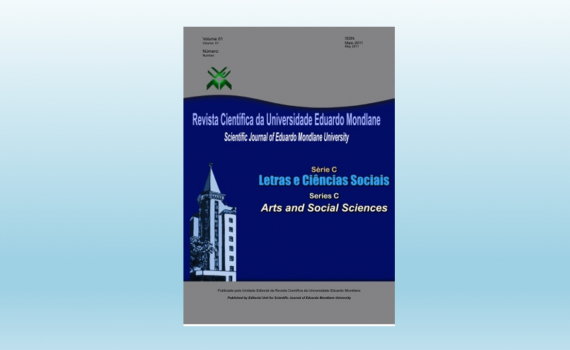
With grant support from EIFL, Universidade Eduardo Mondlane (UEM) in Maputo, Mozambique, initiated a project (November 2024 – February 2026) to enhance the quality and sustainability of the Diamond (no-fee) journal, Revista Científica da UEM: Série Letras e Ciências Sociais (the UEM Social Sciences and Humanities journal).
The journal is hosted by Revistas Científicas da UEM (RC-UEM), the university’s primary publishing platform. The main aim of the journal is to disseminate the findings of scientific research in the fields of Social Sciences and Humanities, Arts, Administration, Journalism and Information Sciences conducted by researchers of UEM and other Mozambican and international institutions. Articles are published in Portuguese or in English, with titles, summaries and key words in both languages.
The project is one of 33 projects that have received grant support from EIFL through the ‘Collaboration for Sustainable Open Access Publishing in Africa’ project.
What has changed as a result of the project?
Journal quality, visibility and design have improved
UEM organized a series of workshops to develop the capacity of the editorial staff of the Revista Científica da UEM: Série Letras e Ciências Sociais. In addition, journal staff took part in knowledge-sharing events of the no-fee open access publishing in Africa community of practice (CoP) set up by the ‘Collaboration for Sustainable Open Access Publishing in Africa’ project.
“These knowledge-sharing sessions are really a good opportunity to share and learn about many aspects related to scientific journal publication such as training for editors and complying with journal indexing requirements,” said Rui José, Assistant Editor of Revista Científica da UEM: Série Letras e Ciências Sociais.
Using knowledge gained through the CoP meetings and the ‘EIFL guide, Quality in Diamond Open Access Publishing: guidelines, policies, and templates’, staff of the Revista Científica da UEM: Série Letras e Ciências Sociais have enhanced the journal’s editorial policy, author guidelines and overall description of the journal. Templates included in the EIFL guide formed the basis of the journal’s new editorial policy and author guidelines.
The journal’s Editorial Board has been strengthened by the inclusion of new members from Brazil, Germany and Portugal: Universidade de Santa Catarina and Universidade Federal do Espírito Santo (Brazil), Universidade de Aveiro (Portugal) and University of Cologne (Germany).
To build the pool of peer reviewers, UEM organized an online capacity building workshop for peer reviewers and potential peer reviewers. The workshop, organized in partnership with the University of Minho in Portugal, attracted over 90 participants.
To attract and encourage reviewers, the Revista Científica da UEM: Série Letras e Ciências Sociais now issues reviewer recognition certificates. The certificates verify and validate reviewers’ contributions and are important for their visibility and academic advancement.
“The skills we have learnt and applied during the project period have improved the quality, visibility and design of the last 15 articles published in the Revista Científica da UEM: Série Letras e Ciências Sociais in 2025. We have included ORCID-IDs for authors; we registered for Crossref which is providing DOIs at no cost, and we have assigned DOIs for articles, improving their visibility and discoverability. We have included Author Statements to clarify the roles of different contributors to articles, and a Creative Commons Attribution 4.0 International Licence. To improve design, we now use single-column layout for all articles,” said Aidate Mussagy, Editor-in-Chief of the Revista Científica da UEM: Série Letras e Ciências Sociais.
To further improve discoverability and visibility of journal articles and the journal, DOIs will be assigned to articles published before the project, and the journal is now indexed in the Directory of Open Access Journals (DOAJ).
“The project has given us new perspectives on the processes needed for publishing scientific journals. We believe we have gained experience and understanding of best practices in running a quality Diamond open access journal that we can share with other institutions.” – Aidate Mussagy, Editor-in-Chief.
Technical infrastructure and operations have improved
Technical infrastructure of the journal has improved through the purchase of a dedicated server for the UEM-RC platform. By removing the need to share a server with other UEM units, the project has given managers, editors and technical staff of the four journals that the platform hosts greater independence and control over production and publication processes.
In addition to purchase of the server, the project made it possible to upgrade the journal management and publishing software used by the platform from Open Journal Systems OJS 3.2, released in early 2020, to OJS 3.5, the new version of the software released in 2025. Editorial and publication processes are now smoother and more efficient.
“The main advantage is that we can change the old practice of managing the publication process via email. Now the entire journal editorial workflow can be done via the OJS platform. Moving to OJS 3.5 has also significantly improved the accessibility of our journal website, the information that we share with our authors and readers, and our compliance with best practice in scholarly publishing,” said Horacio Zimba, Director of UEM Documentation Services and UEM Central Library and Copy Editor of Revista Científica da UEM: Série Letras e Ciências Sociais.
RC-UEM platform technical staff installed the OJS 3.5 software, guided by journal editors, who also gained practical skills in using the software in journal management and publishing workflows. Staff have also been trained to configure texts in HTML and XML formats, and from 2026, articles will be published in these formats.
Who sustains ongoing journal expenses?
All costs of producing and publishing the journal are covered by UEM.
The journal’s operational base is located in an editorial unit in the central library of UEM. The journal’s editorial and technical team is made up of staff from different UEM departments, the library, IT, and communication services. Staff members performing editorial tasks are employed by the university. The editor-in-chief is a full-time employee, along with administrative staff. The remaining members of the editorial team are academic and research staff of the university, and undertake editorial work for the journal part-time, on a voluntary basis.
More about the Revista Científica da UEM: Série Letras e Ciências Sociais. OA-AFRICA-GRANTEE


